A bumpy lawn is harder to mow, scalps on the high spots, puddles in the low ones and never looks quite right, however green it is. Top-dressing fixes it: a thin layer of sand worked into the lawn, which the grass grows up through. Do it a few times and the bumps disappear.
It’s one of the most satisfying jobs in lawn care. It’s also easy to overdo. Here’s how to do it properly.
When to do it
Top-dress when your grass is growing strongly, so it pushes through the sand in a week or two.
- Warm-season grasses (Kikuyu, Bermuda/couch, Buffalo, Zoysia): late spring to late summer. In the southern hemisphere, October to February, with November and December the sweet spot.
- Cool-season grasses (Ryegrass, Fescue): spring or early autumn, when it’s mild and growing.
Never top-dress a dormant or stressed lawn. Sand on top of grass that isn’t growing just sits there, shading it.
What to use
Use washed sand: washed river sand, washed plaster sand or a bagged “lawn dressing” that’s mostly sand. You want it fine, free of stones, low in clay and free of weed seeds.
- Avoid builder’s sand with clay in it, garden soil and straight compost. They bring weed seeds and, worse, create layers.
- Stay consistent. Water moves badly between layers of different textures. If you use sand this year, use sand next year too.
- A little compost in the mix (up to about a fifth) can help on very sandy, hungry soils, but sand alone is the safe default for levelling.
How much you need
The maths is simple: 1 cubic metre of sand covers 100 m² at 10 mm deep.
| Lawn size | 5 mm layer | 10 mm layer |
|---|---|---|
| 50 m² | 0.25 m³ | 0.5 m³ |
| 100 m² | 0.5 m³ | 1 m³ |
| 250 m² | 1.25 m³ | 2.5 m³ |
A cubic metre of sand weighs roughly 1.5 tonnes, so for anything over a few bags, order a bulk delivery and have it dropped on a tarp near the lawn. Bags are usually sold by volume: a 40 dm³ bag covers about 4 m² at 10 mm. Buy a little extra for the low spots.
Step by step
1. Find the low spots
Lay a long straight-edge or a spirit level on a plank across the lawn and look for gaps underneath. Walk it after rain and note where water sits. At dusk, lie down and look across the lawn with a torch held low: every bump throws a shadow. Mark the hollows with flour or pegs.
2. Fix the cause first
A low spot over an old trench, a rotting tree stump or a leaking pipe will keep sinking. Deal with that first. Hollows deeper than about 3 cm are best fixed by cutting the turf, lifting it, filling with soil underneath, firming and laying the turf back, rather than piling sand on top.
3. Mow low and clear the clippings
Mow a notch or two lower than usual and collect the clippings. Shorter grass lets the sand reach the soil and means more of each blade still pokes through afterwards. Don’t scalp it down to bare stems.
4. Scarify and aerate (if needed)
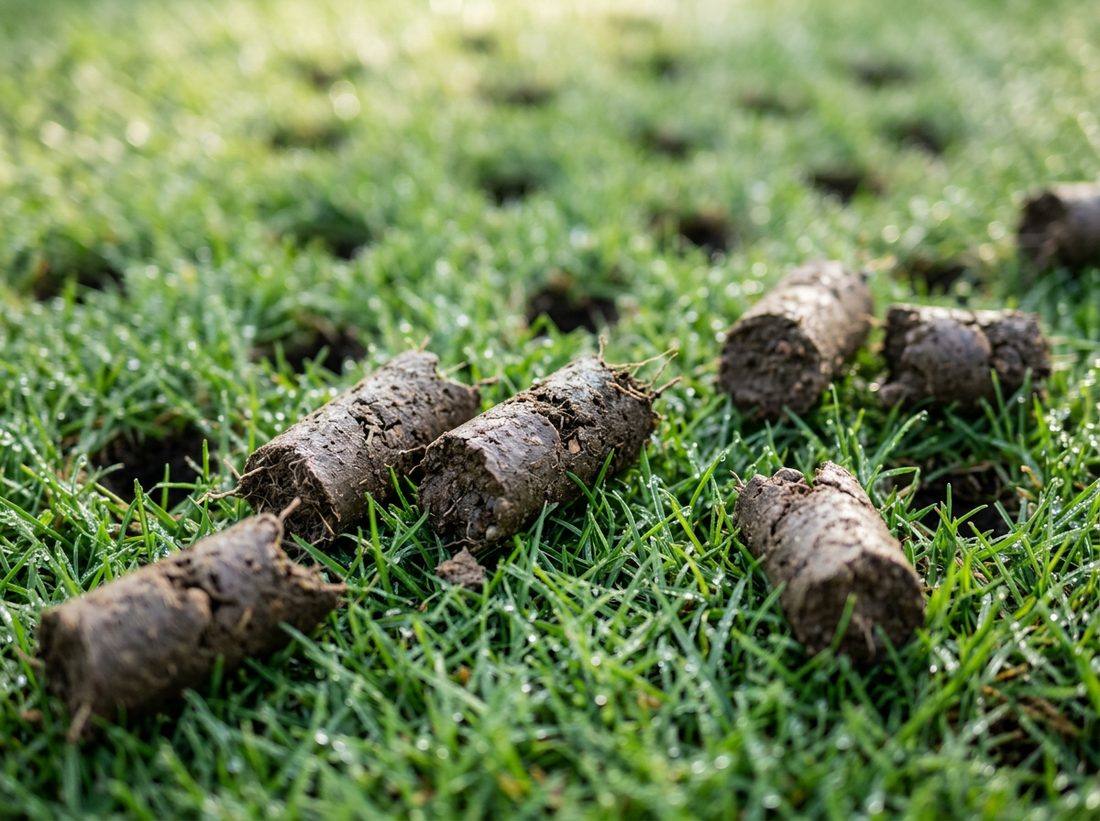
If there’s a spongy layer of thatch under the green, scarify it out first. If the soil is compacted, core-aerate. Both are optional, but top-dressing straight after aerating fills the holes and gives you the best result for the effort.
5. Spread the sand
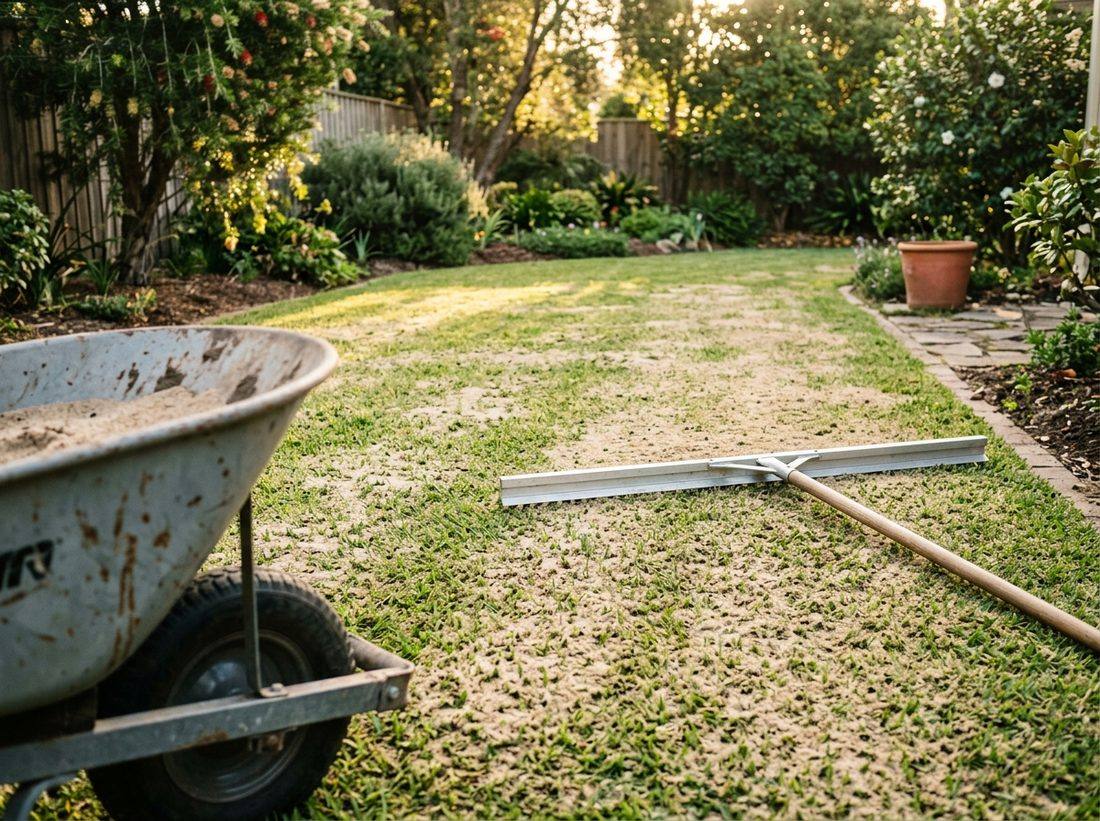
Use dry sand: damp sand clumps and won’t spread. Tip small piles across the lawn with a wheelbarrow and a shovel, then flick it out evenly. Concentrate on the low spots and go thin everywhere else.
6. Level it
Drag the sand with a levelling rake (a lute), pushing and pulling in one direction, then again at right angles. The wide, flat head skims the high spots and fills the low ones. Finish with the back of a rake, a drag mat or a broom to work the sand down into the grass.
The golden rule: you should still see the grass. Leave at least a third to half of every blade showing. On Kikuyu and Bermuda, that usually means no more than 10 to 15 mm in one go, and less on Buffalo and Zoysia. For deeper hollows, add a layer, let the grass grow through, and add another two or three weeks later.
7. Water it in
Water gently to settle the sand into the canopy without washing it into puddles. Then keep the lawn just moist for a week or two while it grows through: light morning watering every day or two in hot weather.
8. Mow when it’s through
Wait until the grass has grown through and the sand has settled, usually one to two weeks. Mow with a sharp blade and take only the top off: sand blunts blades, so check yours afterwards.
Cool-season lawns
Ryegrass and Fescue mostly grow in clumps rather than spreading with runners, so they can’t climb out of a thick layer. Keep each layer to about 5 mm, and overseed into the sand at the same time to thicken the lawn.
Mistakes to avoid
- Too thick, too soon. The number one cause of yellow, smothered patches after levelling.
- The wrong material. Clay or soil layers cause drainage trouble for years.
- Doing it in winter. Wait until the grass is growing.
- Burying sprinkler heads. Mark them first and clear them after.
- Expecting one go to fix everything. A truly flat lawn usually takes two or three light top-dressings over a season.
- Feeding on the same day as a heavy layer. Feed a week before, or once the grass is through.
The short version
- Top-dress while the grass is growing hard.
- Washed sand, the same every time.
- 1 m³ covers 100 m² at 10 mm.
- Mow low, spread dry sand, level in two directions.
- Leave the grass tips showing. Repeat rather than pile on.
- Water gently and mow when it’s through.
What you’ll need
Generic suggestions, not endorsements. No brand has paid to be here and there are no affiliate links in this box.
- Washed river sand or lawn dressingWashed sand, the same one every time, so you don’t build layers.
- Lawn levelling rake (lute)The one tool that makes this job easy.
- Drag mat or straight-edged boardWorks sand down into the canopy.
- Long straight-edge or spirit levelFinds the dips your eye misses.
Questions people ask
What sand should I use to level my lawn?
Washed river sand, washed plaster sand or a bagged lawn dressing that is mostly sand. It should be fine, free of stones and low in clay. Avoid builder’s sand with clay in it, garden soil and straight compost.
How often can I top-dress?
Every two to four weeks during the growing season, as long as the grass has grown through the last layer. Most lawns need one or two light top-dressings a year once they’re level.
Can I top-dress Buffalo grass?
Yes, but keep layers thinner than you would on Kikuyu or Bermuda, about 5 to 10 mm, and do it in late spring or summer when it’s growing well. Soft-leaf Buffalo recovers more slowly, so be patient.
How soon can I mow after top-dressing?
Once the grass has grown through and the sand has settled, usually one to two weeks. Mow high and check the blade afterwards, because sand blunts it.
Should I fertilise when I top-dress?
Feeding helps the grass grow through faster. Feed about a week before, or once the grass is back through the sand, rather than on top of a heavy layer.