Kikuyu is one of the toughest grasses there is, but even tough lawns get tired. Years of mowing, braai-side foot traffic and winter rain pack the soil down until water and feed sit on top instead of reaching the roots. Aerating opens it back up, and in the Western Cape the best time to do it is late spring.
Late spring, while it’s growing hard
Aerate when Kikuyu is actively growing, so it can fill the holes within two or three weeks. Kikuyu wakes up once the soil warms in September and October, and by late October it’s running: new runners, fast growth, a deeper green. In most of the Western Cape that makes late October to the end of November the sweet spot, with early December as a fallback.
The timing matters for two reasons. Aerate too early, while the soil is still cold and wet from winter, and the holes sit open with nothing growing into them. Aerate too late, in the January and February heat, and you’re stressing a lawn that’s already working hard to stay green on rationed water.
A few signs that your lawn needs it:
- Water pools or runs off instead of soaking in, even after a short sprinkle.
- A screwdriver is hard to push into the lawn when the soil isn’t dry.
- The grass is thin along paths, the washing line or wherever the dog runs.
- Feed doesn’t seem to make much difference any more.
Is your soil ready?
You want the soil moist, not wet. Dry soil is too hard for the tines to go deep, and wet soil smears and squashes instead of cracking open.
Water deeply the day before, about 20 to 25 mm (a tuna tin on the lawn shows you when you’re there), then let the surface dry off. Push a long screwdriver or soil probe into the lawn:
- It slides in to the handle with a firm push: you’re ready.
- It stops after a few centimetres: water again and try tomorrow.
- Your shoes squelch or the soil sticks to the blade: wait a day.
Before you start, walk the lawn and mark every sprinkler head, valve box and buried cable with a peg or a bit of tape. Tines and pop-up sprinklers don’t mix.
Hollow-tine or spike?
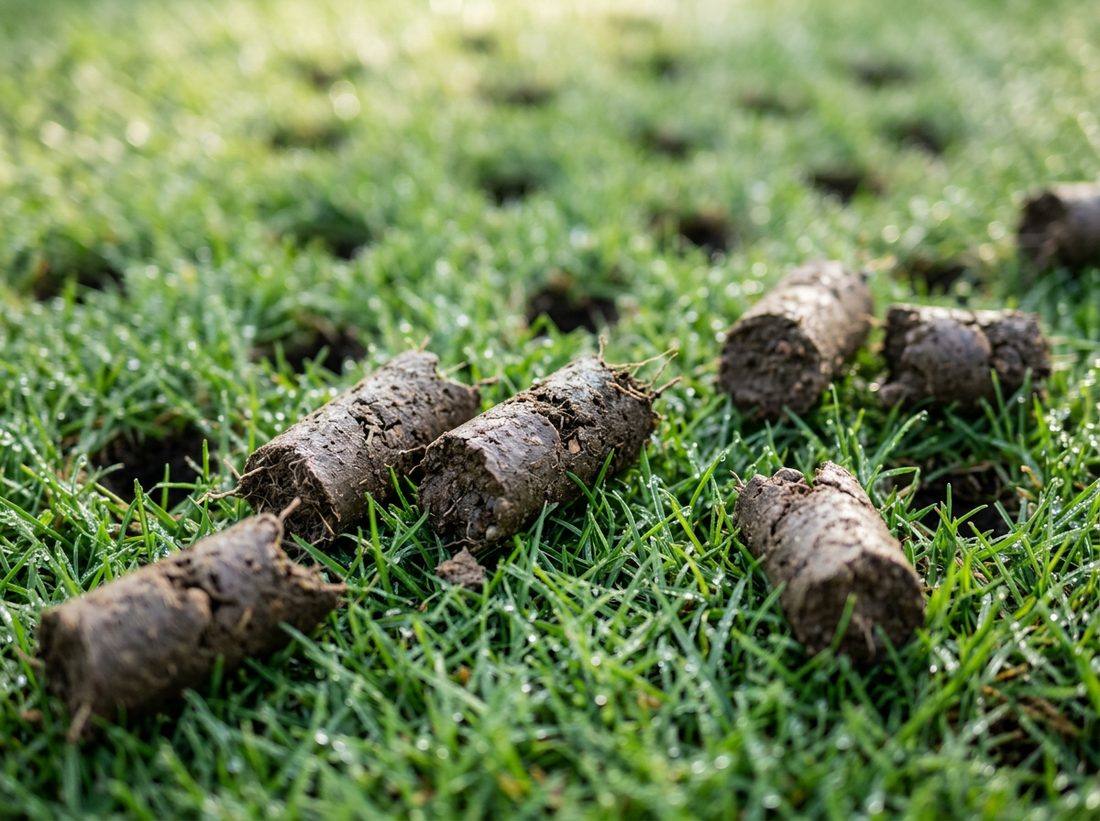
Hollow tines pull out small plugs of soil, usually 10 to 20 mm wide and 50 to 100 mm long. Removing soil is what actually relieves compaction: the soil around each hole has somewhere to move, and air, water and roots follow.
Solid spikes just push holes in. On sandy soil that can help water get in for a while, but on heavier soil spiking squashes the soil around each hole even tighter. Spiked shoes and roller spikers fall into this group.
For a compacted Kikuyu lawn, go hollow-tine:
- Hire a machine for a typical suburban lawn. Plenty of tool-hire shops have them, and splitting a day’s hire with a neighbour halves the cost.
- Book a pro if your lawn is large, sloped or full of irrigation. Verified pros in the app list core aeration as a service.
- Use a hand corer for a small lawn or a few bad patches. It’s hard work, but it’s the same job.
Go over the lawn in one direction, then again at an angle, aiming for holes every 5 to 10 cm. Concentrate on the worst spots: paths, play areas and anywhere water pools.
Same afternoon: top-dress and feed
Open holes are the best invitation your lawn will get all year, so don’t waste them.
- Leave or clear the cores. Leave them to break down, or rake them up if you’re top-dressing.
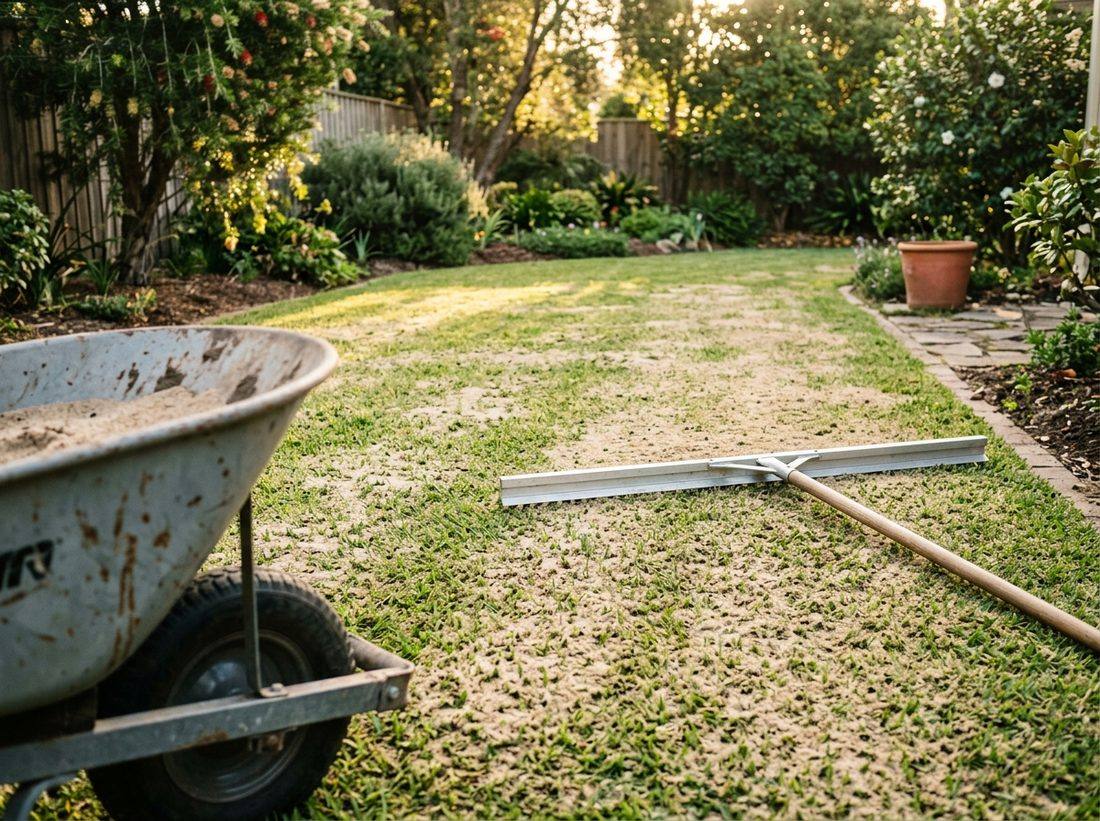
- Top-dress thinly. Spread washed river sand or a sandy lawn dressing, no more than about 1 cm deep, and work it into the holes with the back of a rake or a levelling rake. Make sure you can still see the grass tips. This is also the moment to fill shallow low spots, while the grass is growing fast enough to push through.
- Feed. Use a lawn fertiliser at the rate on the bag, spread evenly with a spreader. A slow-release feed keeps working while the lawn recovers. Don’t be tempted to add extra: more is not better, and it can burn.
Avoid compost or garden soil with clay in it for top-dressing. It brings weed seeds and builds up a layer that water struggles to get through, which is exactly what you’ve just fixed.
Water it in, then leave it alone
Water deeply straight after you’ve fed, to wash the fertiliser off the leaves and into the holes. For the next two weeks, water every second or third morning if it hasn’t rained, early in the day. Always check your municipality’s current watering rules and times first: the Western Cape knows all about drought, and restrictions can change.
Hold off mowing for about a week. When you do mow, keep the cut at 30 mm or a little higher until the holes have closed and the sand has disappeared into the green. In a fortnight you should see thicker, greener growth, and the lawn will soak up water instead of shrugging it off.
Then log it, so the Pulse knows you’re done and your neighbours can see it too.
The short version
- When: late October to the end of November, while Kikuyu is growing hard.
- Soil: moist, not wet. Water 20 to 25 mm the day before.
- How: hollow tines, every 5 to 10 cm, two directions.
- Then: top-dress no more than 1 cm, feed at the bag rate, water it in.
- After: water every two or three mornings for two weeks, and no mowing for a week.
What you’ll need
Generic suggestions, not endorsements. No brand has paid to be here and there are no affiliate links in this box.
- Hollow-tine aerator (hire or buy)For most suburban lawns, half a day with a hired machine does the lot.
- Hand hollow-tine corerFor small lawns and compacted patches.
- Soil probe or long screwdriverThe quickest moisture test there is.
- Washed river sand or lawn dressingTo fill the holes and level low spots while they’re open.
- Slow-release lawn fertiliserA steady feed while the lawn recovers.
Questions people ask
How often should I aerate Kikuyu?
Once a year is plenty for most home lawns. Lawns with heavy foot traffic, dogs, or clay-rich soil can take a second, lighter pass in late summer or early autumn while the grass is still growing.
Can I aerate in summer?
You can, as long as the lawn is growing and not drought-stressed. Avoid heatwaves and periods of strict water restrictions, and water well the day before and for two weeks after. If you missed spring, a cooler spell in January or February works.
Should I fertilise before or after aerating?
After. Feeding into open holes gets the fertiliser down to the roots. Aerate, top-dress, feed, then water it all in.
Should I leave the soil cores on the lawn?
Yes, if you can live with the look for a week or two. They dry out, break down when you mow and water, and return soil to the surface. Rake them up if they bother you, or if you’re about to top-dress and want a clean surface.
Do I need to scarify first?
Only if there’s a thick, spongy layer of thatch (more than about 1 cm) under the green. Kikuyu builds thatch quickly, so many people scarify, aerate and top-dress on the same weekend in spring. Scarify first, aerate second.